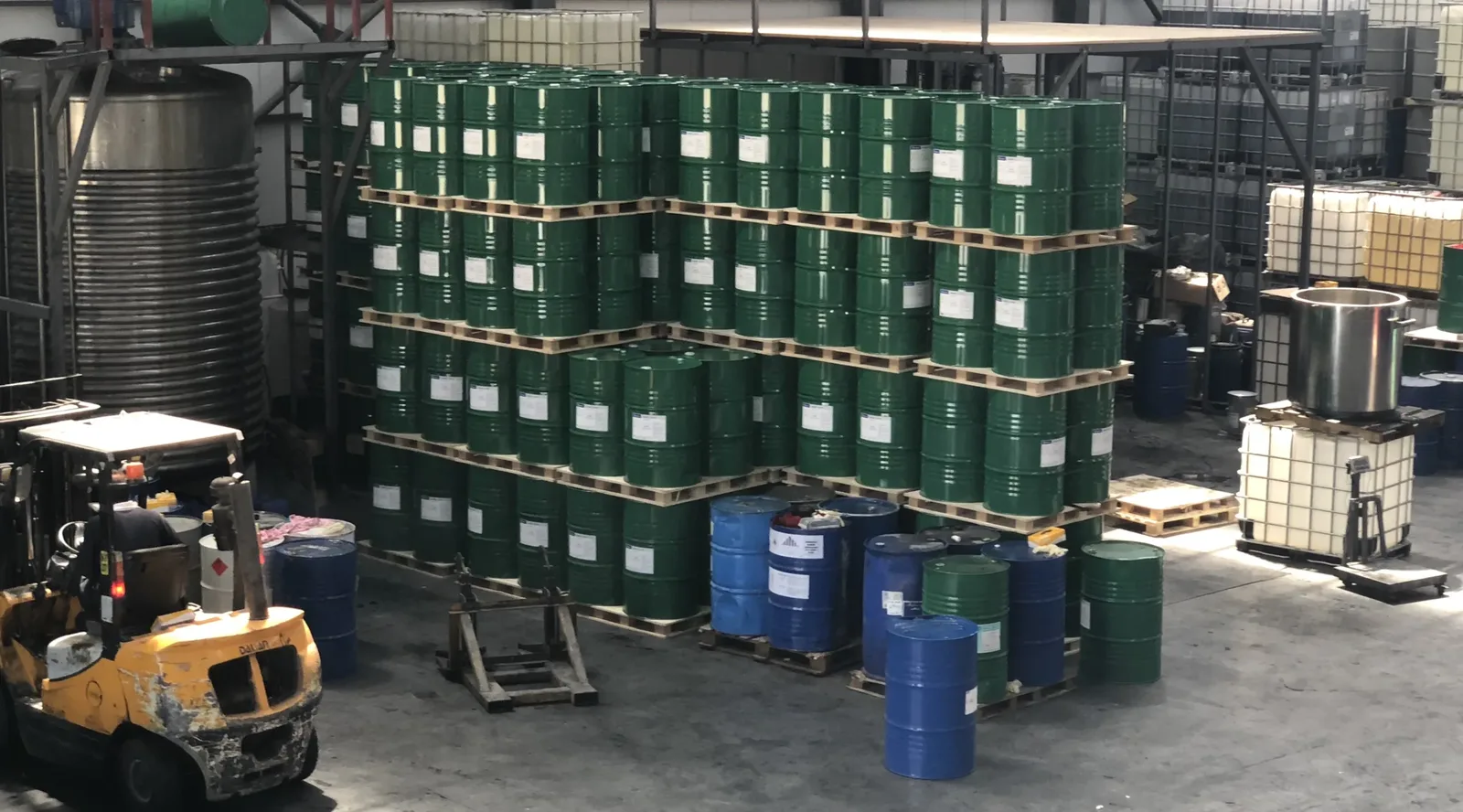
Polyol & MDI Systems
Polyol and MDI (Methylene Diphenyl Diisocyanate) are the two fundamental components used in the production of polyurethane systems. These raw materials play a crucial role in determining the…
What are Polyol & MDI Systems
Polyol and MDI (Methylene Diphenyl Diisocyanate) are the two fundamental components used in the production of polyurethane systems. These raw materials play a crucial role in determining the mechanical properties, durability, and flexibility of the final polyurethane product.
By combining polyol and MDI, manufacturers can produce a wide range of polyurethane-based materials, including foams, coatings, adhesives, sealants, elastomers, and insulation systems.
Data sheet and sample
The technical data sheet and safety data sheet for this system are shared on request.
By combining polyol and MDI, manufacturers can produce a wide range of polyurethane-based materials, including foams, coatings, adhesives, sealants, elastomers, and insulation systems.
What it delivers
Superior Mechanical Properties – Enhances durability, flexibility, and impact
resistance.
Chemical & Moisture Resistance – Protects against chemical degradation and
water absorption.
Thermal Stability – Withstands high temperatures and harsh environmental
conditions.
Customizable Formulations – Adaptable to various polyurethane applications.
What is Polyol?
Polyols are key chemical components in polyurethane production, serving as reactive intermediates that determine the flexibility, hardness, and resilience of the final product. There are two main types of polyurethane polyols :
The selection of polyol type and molecular weight significantly impacts the final polyurethane formulation, allowing for customization based on industrial requirements.
Polyether Polyols – Offer excellent flexibility, hydrolysis resistance, and
impact strength.
Polyester Polyols – Provide higher tensile strength, abrasion resistance, and
chemical stability.
What is MDI (Methylene Diphenyl Diisocyanate)?
MDI (Methylene Diphenyl Diisocyanate) is a highly reactive isocyanate used in polyurethane synthesis. It is primarily available in three forms:
MDI reacts with polyols to form polyurethane materials with superior mechanical properties, adhesion, and chemical resistance.
Pure MDI – Used in specialized polyurethane applications requiring high
reactivity and rigidity.
Polymeric MDI (PMDI) – Commonly used in flexible and rigid polyurethane foam
production.
Modified MDI – Tailored formulations designed for specific polyurethane
applications.
Where it is used
Rigid & Flexible Polyurethane Foams – Used in insulation, automotive, and
furniture applications.
Polyurethane Coatings & Adhesives – Provides strong bonding and protective
layers.
Elastomers & Sealants – Enhances elasticity and sealing performance.
Polyurethane Industrial Plastics – Applied in high-strength plastic materials.
Footwear Polyurethane Systems – Offers abrasion resistance and durability.
CASE Polyurethane Systems – Essential for Coatings, Adhesives, Sealants, and
Elastomers.
High-Quality Polyurethane Raw Materials – Meeting global industry standards.
Custom Polyurethane Formulations – Tailored to specific industrial needs.

More from Raw Materials & Chemicals
Polyols
In rigid foam systems, polyether polyols, which are used in block and sheet foam production…
Isocyanates
They are isocyanates used in many sectors including floor coverings, adhesives, sandwich…
Prepolymers
Polyurethane production relies heavily on high-performance raw materials, and prepolymers are…
Let us specify the right system for your line
Tell us your application, line type and target density; our technical team will reply with a formulation proposal.