
Slabstock Foam
Slabstock polyurethane systems can consist of 2 to 8 components, depending on the manufacturer's specifications, offering versatile and customizable properties. These systems are commonly us…
What is Slabstock Foam
Slabstock polyurethane systems can consist of 2 to 8 components, depending on the manufacturer's specifications, offering versatile and customizable properties. These systems are commonly used for producing foams with various characteristics for different applications.
Slabstock foams are typically made with varying densities and prepared using essential components such as:
In slabstock polyurethane systems, different production methods can be applied to improve the quality and functionality of the foam:
Data sheet and sample
The technical data sheet and safety data sheet for this system are shared on request.
Slabstock foams are typically made with varying densities and prepared using essential components such as:
In slabstock polyurethane systems, different production methods can be applied to improve the quality and functionality of the foam:
What it delivers
Polyols
Determine the mechanical properties of the foam, such as flexibility, rigidity, and durability.
Isocyanates
The reactive component that initiates the polyurethane reaction.
Surfactants
Improve the structural properties of the foam and ensure a uniform distribution of ingredients.
Blowing Agents
Increase the foam's volume and help achieve the desired density.
Flame Retardants
Enhance the foam's fire resistance properties.
Antioxidants
Prevent the degradation and aging of the foam, extending its durability.
Colorants
Optional components used to improve the foam's aesthetic appearance.
Lamination Method
In this process, liquid polyurethane components are combined to form foam sheets with the desired properties. These sheets are then laminated together to create thicker and more robust foam structures.
Product Description
Slabstock foam can be used in a wide range of industrial and commercial applications, thanks to its various densities and compositions. It can be tailored for use in comfort mattresses, vehicle seating, insulation materials, packaging products, and many other applications.
For technical details and further information, please contact our company. We can provide comprehensive information and offer customized solutions for your needs.
Polyols
Determine the mechanical properties of the foam, such as flexibility, rigidity, and durability.
Isocyanates
The reactive component that initiates the polyurethane reaction.
Surfactants
Improve the structural properties of the foam and ensure a uniform distribution of ingredients.
Blowing Agents
Increase the foam's volume and help achieve the desired density.
Flame Retardants
Enhance the foam's fire resistance properties.
Antioxidants
Prevent the degradation and aging of the foam, extending its durability.
Where it is used
Catalysts
Control the reaction rate, enhancing the efficiency of the production process.
Single-Batch Process
This method provides faster and more controlled production. The components are mixed and combined at once, producing the desired amount and density of slabstock foam in a single operation.




More from Furniture & Foam
Viscoelastic Foam
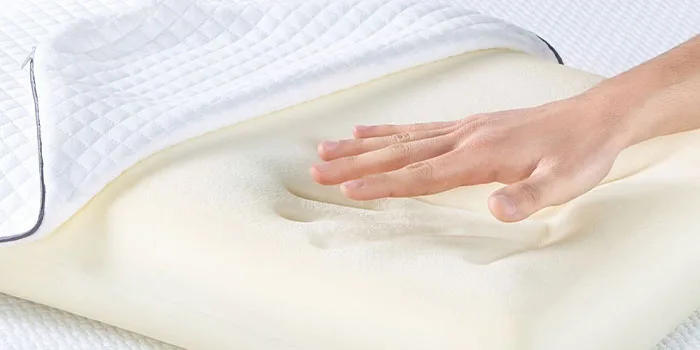
Pluskim's viscoelastic polyurethane formulations are specially designed to adapt to the user's…
HR Moulded Foam
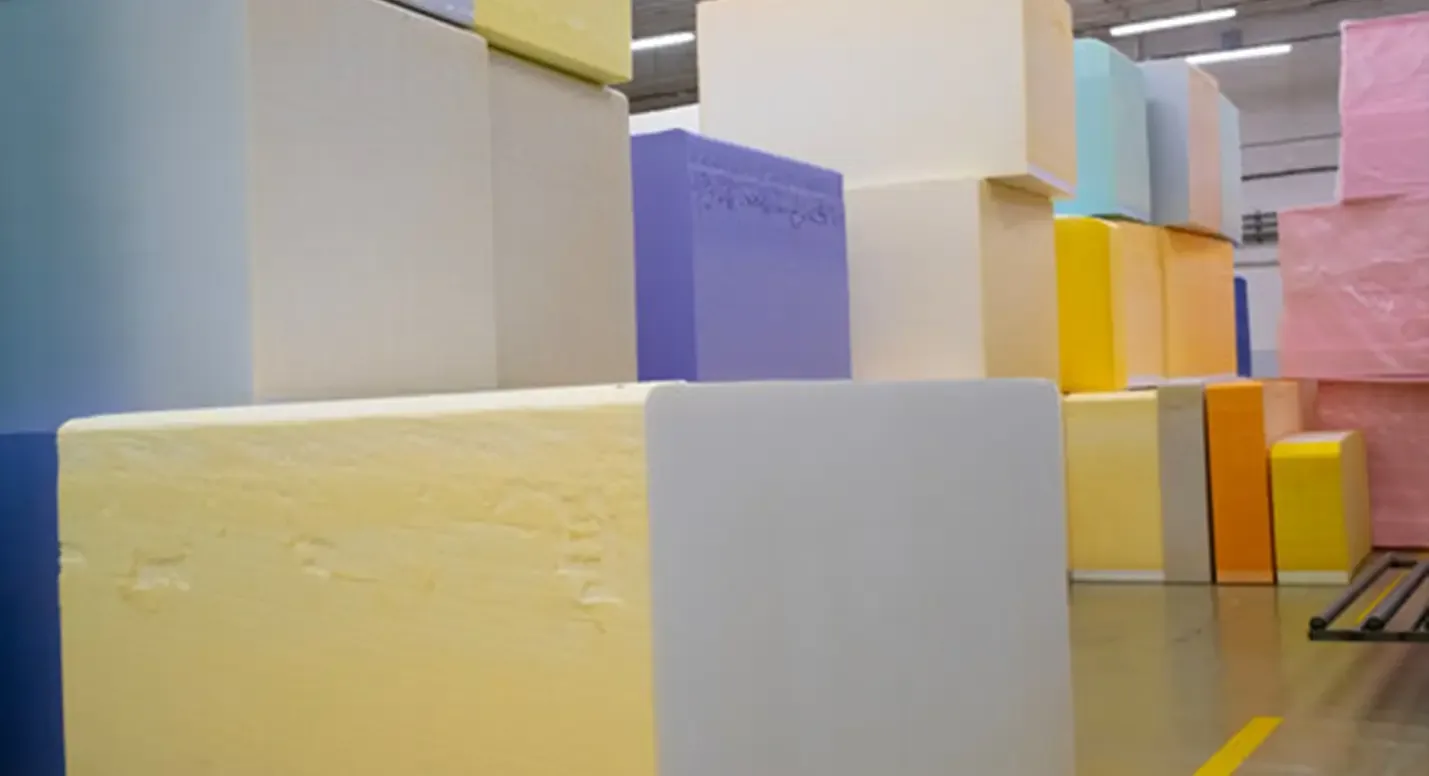
The PLUSOL-F-201 and PLUSNATE-F-200 series represent Pluskim's advanced generation of…

Rebonded Foam Binder
The PLUSNATE C-500 series represents a range of single-component polyurethane binding systems…
Let us specify the right system for your line
Tell us your application, line type and target density; our technical team will reply with a formulation proposal.